

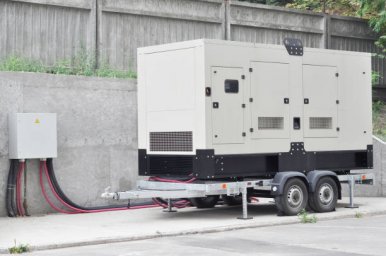
By the second quarter of 2026, picking out power infrastructure for a massive industrial or construction site has moved way beyond just checking a spec sheet. We’re in an era where energy is treated as a strategic asset, not just some utility you plug into. For project managers and lead engineers, the decision-making has shifted toward «Systemic Resilience»—basically, how well a power source adapts to jumpy loads, nasty climates, and tight regulations. If you are currently auditing your own site’s power needs and looking at the heavy-duty specs at ablepower.com.au/, you’re likely noticing that the pro-tier players aren't just buying engines; they are investing in «Power Orchestration.» In 2026, the goal is to kill off «The Downtime Trap»—those expensive, unforeseen pauses caused by bad harmonics, fuel rot, or thermal choking.
Beyond the KVA: Forensic Load Profiling
The most common rookie mistake in 2026 is sizing a generator based on a «static» peak load. Professionals use Forensic Load Profiling instead. They don't just look at the total kilowatts; they map the Inrush-to-Steady-State Ratio.
On a big construction site, you’ve got cranes, excavators, and massive dewatering pumps all kicking in at different times. A pro evaluates how a generator handles these «step-loads.» If a generator has a slow transient response, the voltage is going to sag when a crane starts up, which can trigger a safety shutdown on the site’s sensitive GPS or surveying gear. In 2026, the pros choose units with high-inertia alternators that can «snap back» to nominal levels in under 500 milliseconds. If the machine can’t handle a 100% block load without stumbling, it doesn't make it to a tier-one site.
The Mesh vs. The Single Beast
A unique shift in 2026 is the total rejection of the «Single Point of Failure.» In the past, experts might have bought one massive 1000kVA generator. Today, they go for a Synchronous Mesh of smaller units—like four 300kVA units running in parallel.
This is the N+1 Redundancy model. If one generator needs an oil change or throws a sensor fault, the load-sharing controller just shuffles the demand over to the other three. The «faulty» unit can be isolated and fixed while the site stays at full speed. Plus, this mesh approach saves a fortune on fuel. During the night, when only security lights are on, the system will automatically shut down three units and run just one at its peak efficiency, rather than having a massive 1000kVA engine «wet stacking» at a tiny 10% load.
The Harmonic Purity Audit
In 2026, our job sites are smarter than ever. We’ve got drones, 3D concrete printers, and AI-driven scheduling hubs—all of which hate «dirty» power. Pros now perform a Total Harmonic Distortion (THD) Audit before a single bolt is tightened.
Non-linear loads like variable-speed drives (VSDs) and LED arrays create «electrical noise» that can overheat cables and cause erratic behavior in computers. Professionals look for generators with a THD of less than 5%. They treat electricity like water; if it’s full of «silt» (harmonics), it will eventually clog the pipes and fry the hardware. In 2026, clean power isn't a luxury; it’s a prerequisite.
Climate-Hardening and Altitude Derating
One thing the pros never overlook is the Environmental Penalty. A generator rated for 500kW in a factory in Europe will not produce 500kW on a 45-degree day in the desert or at a high-altitude mine.
In 2026, experts demand Altitude-Compensated Performance. They look for engines with electronic variable-geometry turbochargers that can compensate for thinner, hotter air. They also audit the Radiator Core Density. A standard radiator might clog with red dust in a week; a professional-grade unit uses wide-fin spacing and «push» fans that blow dust out of the enclosure rather than sucking it into the engine's guts.
Active Fuel Polishing: Remote Insurance
On a large project, your fuel might be sitting in a bulk tank for months, or it might be delivered by a tanker that’s traveled a thousand kilometers over corrugated roads. In 2026, experts assume the fuel is contaminated.
A professional-grade setup includes Integrated Fuel Polishing. This is a secondary loop that constantly cycles the fuel through a centrifuge and a water separator, even when the generator is off. It kills off «diesel bug» and pulls out the fine grit that would otherwise destroy a high-pressure common-rail injector. When you’re paying a crew of fifty people $100 an hour, you don't risk a site-wide shutdown over a $50 fuel filter.
The Right to Repair and Edge Intelligence
A unique concern for 2026 is Software Lockdown. Pros are increasingly moving away from «black box» systems that require a proprietary, factory-only laptop just to reset a basic maintenance timer.
They evaluate systems based on Open-Architecture Controls. They want to know that their on-site mechanics can access the «Deep Menu» to diagnose a sensor fault without waiting for a technician to fly in from a city. They also look for Edge-Based Telemetry that sends tiny, compressed data bursts via satellite. This lets the home office see the «health» of the engine—oil pressure, vibration levels, and fuel burn—in real-time.
The 2026 Engineering Standard
Choosing a generator for a large-scale project in 2026 is an exercise in «Strategic Pessimism.» The professionals are the ones who assume that the fuel will be dirty, the load will be jumpy, and the weather will be brutal.
They don't buy based on the lowest price; they buy based on the Total Cost of Ownership (TCO). By using N+1 redundancy, clean harmonic output, and active fuel management, they build a power foundation that is basically invisible. A well-chosen system is one you never have to think about.